Categories
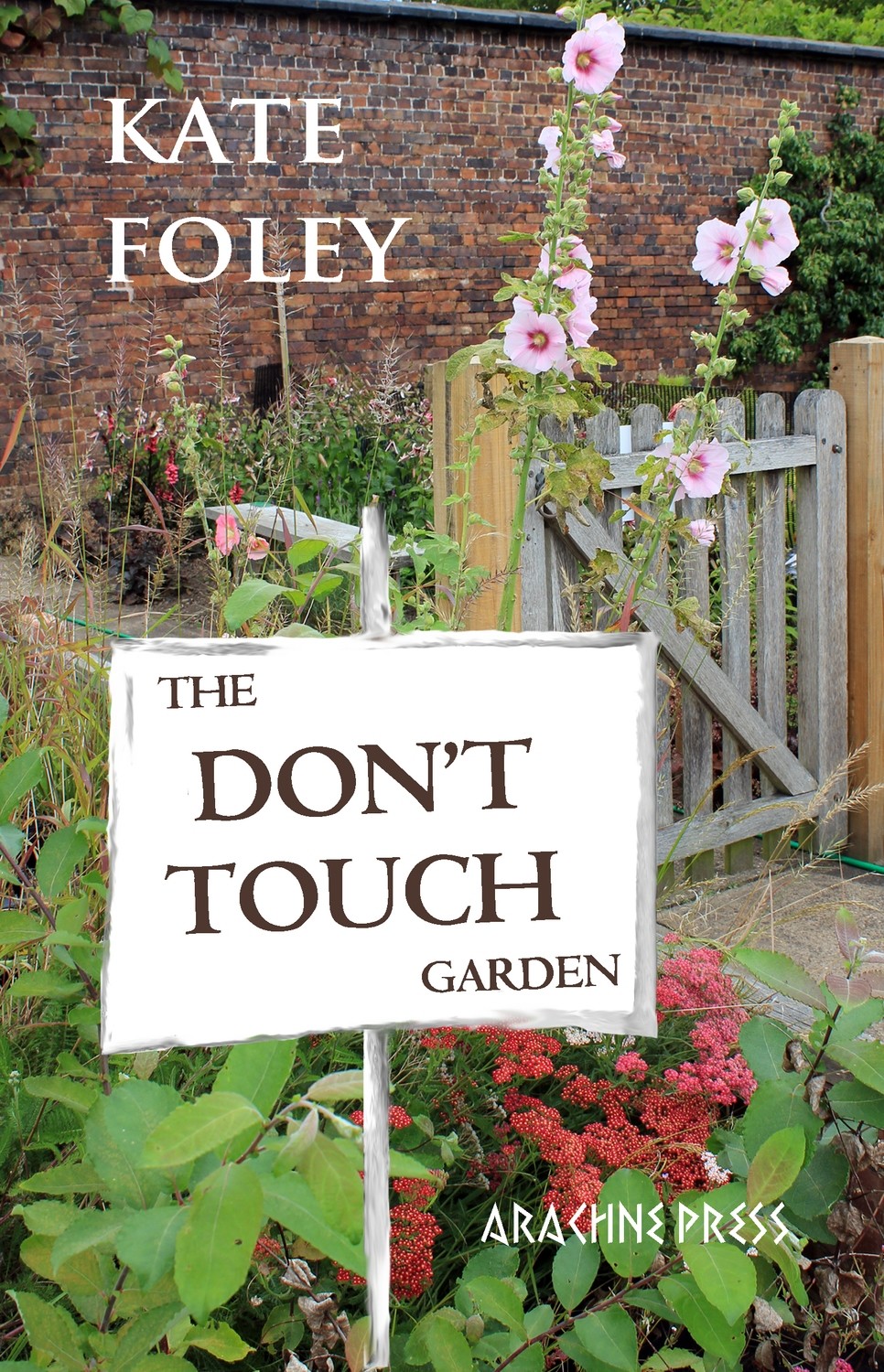
The Don't Touch Garden by Kate Foley
£9.99
23 available
1
Save this product for later
The Don't Touch Garden by Kate Foley
Product Details
Weight: 0.11 kg
The Don't Touch Garden
Kate Foley
ISBN: 978-1-909208-19-3
64 pages
‘Mirror, mirror on the wall’
the old joke says
‘I am my mother after all’
but which?
Born in 1938 and adopted soon after, Kate Foley grew up in London during WWII.
The Don’t Touch Garden explores what it is to be adopted, both for the child and the adoptive parents, through a wide range of poetic styles and complex emotions. Sometimes autobiographical and narrative, sometimes oblique, brought together for the first time, these poems trace a search for identity and for the meaning of family which everyone can relate to, whatever kind of family brought them up.This is NOT a misery memoir! Some terrible things happen, but the voice of Kate’s young self, deeply unimpressed by all the drama around her, holds the story together.
The book was launched in National Adoption Week.
4th May: Thank you for your kind donation of two and sixpence …
19th August: I have pleasure in sending you particulars of a dear little girl …
24th August: I am so glad to know you are interested in this little Catholic baby and can come on September 5th.
It will be quite in order for you to take baby if you like her and there is no need to bring any clothing, as baby will be dressed ready for the journey and a small parcel of clothes will be given you at the interview.
So wrote The National Adoption Society to the woman who became Kate Foley’s adoptive mother.
Sixty years later she was standing with her newly discovered brother by the bronze plaque commemorating their mother in a San Francisco graveyard.
This is not the well-worn story of abandonment and discovery, although the poems do hinge around those facts. While these poems will resonate strongly with those of us adopted as children, and with adoptive parents; all of us grow up wondering who we are and who we might be, and need to see, accept and parent the face we find in the mirror.
Kate Foley has published seven collections previously, and her poetry has garnered many awards, commendations and prizes, most recently the 2014 Second Light Long Poetry Prize (Judged by Jackie Kay) for The Other Side of Sleep, the title poem of Arachne Press’ first poetry anthology. Her first ever prize (judged by U.A. Fanthorpe) was for My Father, Counting Sheep which is included in the collection.
Drawn from poems written over several years, this book’s dizzying ambition is to plot a path through the life of an adopted child. Foley does so with consummate skill, creating poetic forms to encompass the experiences of the child, her birth mother, her adoptive parents, aunts and midwives. Foley’s language is imagistic, fragmentary, full of jump-cuts, yet always vigorously carried forward through a set of clear-speaking voices to show us that the “DNA of years” is just as formative as that “tangle of parental DNA” we are each born with. There is suffering and lies, grief, distance and disappointment, but her message is ultimately an optimistic one: blood is not thicker than water; we are each of us, to a large extent, creators of ourselves, parents of ourselves. Brilliantly focused and carefully sequenced, these poems provide a thrilling and moving account of the processes by which any of us – adopted or not – become who we are.
These poems are an absorbing account of the legacy of being an adopted child. With language at once forthright and tender, this moving sequence reflects Foley’s unflinching gaze into the mirror in a sometimes excoriating attempt to discern traces of her belonging, and to make peace with the past. An illuminating must-read for adoptees and their parents, both biological and de facto, and for adoption workers who engage with the precarious task of arranging the exchange of one set of parents with another.
Joy Howard. (Poet, publisher and former Fostering Services Manager).
A lovely long review from Lindsay MacGregor in Poetry Salzburg Review
Kate Foley’s eighth collection, The Don’t Touch Garden, is firmly rooted in her own life...
It is hardly surprising that it has taken Foley, born in 1938, so many years to publish these poems. She confronts difficult issues and complex feelings head on. “Lost Property” (8-9), imagining the distress of her birth mother, ends rue-fully: “She’s lost her memory but not / its weight and shape and pain.” (9)
Foley is adept at using sound, particularly alliteration and rhythm, to bring observed moments to life. So, in the title poem, we distinctly hear the repeated hacking as: “My father coughs the cough that kills / thirty years later” (16).
The collection makes for a challenging read, confronting all of us with the vulnerability of childhood and the isolation that comes with inability to articulate feeling.
But there’s humour too. In an observation which may resonate with many British readers, “My mother murdered cabbage. / It died with a yelp in the pot.”
This is a tender and moving collection. Although it is about adoption, there is something in this collection for anyone who has been a child...
review in ArtemisPoetry Nov2015
a random button / from my mother’s button box / though each one had its story, / a scrap of whole cloth / dangling from its shank. (Sometimes I Feel Another Face)
Foley’s account of her search to make the random particular is absorbing and moving. She writes of the intimate details of family life, warts and all, with painful regret at the stiffness of her relationship with her mother who as she remembers “made the world / seven times over each day ... and peopled it, / a touch of iron / for those who strayed / beyond the picket / of your imagination” (Making the Days).
Her father - whose large hands, at once hard and tender, feature throughout as a kind of avatar for his care and protectiveness - provided, you feel, the nurturing of that poet’s sensibility which has helped her to look back at her parents with compassion and understanding, until finally she can write “I have collected all our tears in a small bottle / and put it on the shelf with the household gods” (The End of a Long Conversation Has Come).
Foley is a mistress of the spare but telling detail which gives immediacy to the places inhabited by this unfolding story. The reluctant forcing down of “cold gobs of cod” and the limping home “in my new stilettos / and sugar starched slip, / creaking like ice” for example have an immediacy that vividly evokes either end of the post-war decade (Milk). The awareness of difference built up by small accretions are suggested by snatches of conversation - “thicker / than water hissed at the tea table / wasn’t a cup of weak tea, / but how you described / who I would never be” (Elephant Aunts).
Foley, like all adopted children, has to resolve the matter of belonging. She asks (and it feels as if she is here addressing both her birth and adoptive mother) “Do you see me now / in my skin, in my own skin, / printed with relics / of a child never yours? //1 will wear your echoes / for company” i Adoption). She concludes that perhaps “Ostermilk was thicker than blood” (Thyrotoxicosis), but leaves us with an acute awareness of the “trembling / possibility of nakedness” (Sometimes I Feel Another Face) and the sense of a search that is ongoing until “one day / if only I can find the right bones” she will find reconciliation with both life and death (The Right Bones).
However, for Foley the reclamation of personhood through love is also possible - exploring the lines of “A very wise poet” who “once said lovers / ‘are each other’s parents’ ” she reaches with great tenderness a place of new resolution “let the roof shelter / nouns into verbs” (Mothers and Fathers).
This is a remarkable collection of poems that should be read by everyone. The Don’t Touch Garden is concerned with many of the specifics about adoption and its aftermath, but contains much wisdom that also applies more generally about self-discovery, making sense of our pasts and moving into a future which can, at least in part, be as we make it.
Joy Howard
You May Also Like
Display prices in:GBP
