Categories
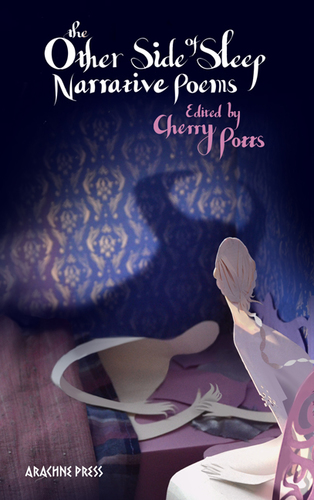
The Other Side of Sleep
£5.00
reduced price
9 available
1
Save this product for later
The Other Side of Sleep
Product Details
Weight: 0.19 kg
NOW Reduced to £5
Featuring 25 poems which break the rules – starting with the no-more-than-40-lines rule. If you’ve ever considered putting a poem in for a competition or an anthology, you know what we are talking about.
These poems are long.
They take their time.
They tell a story, sometimes in a straightforward purposeful way, sometimes in a roundabout oblique way, but somewhere there is a thread of narrative woven through.
Long, narrative, but by no means traditional poems, by contemporary voices.
What started as a complaint about the ‘40-line rule’ in much of the poetry world has turned into an anthology that not only breaks that rule, but stomps all over it.
Themes both great and small are explored in narrative poems that pack a punch. Human interactions from conversation, storytelling, lending and borrowing, theft, prayer, memory, shopping and a long walk, right through to sexuality, time travel, truce negotiations, disappearance, natural disaster, violence and death are all explored, many of them rooted in landscape and place. These lie alongside equally rooted mythological and historical tales drawn from Greece, Turkey, Africa, Scandinavia and Britain.
What draws all these themes together is the strength of the storytelling. Emotions as diverse as frustration, disappointment, embarrassment, hope, nostalgia, anger, and fear are channelled through spectacular poetry in many different forms into truly satisfying work.
A narrative invasion of your brain like thistleseed across northern borders or bees through sleep . A strong freshening wind trembling out of long forgotten valleys and across the face of anyone sitting outside their cave, crosslegged, paying attention. They are fables made flesh, a barrage of artistic light that breaks surface with an oily sheen. Have faith, reader. Enter this book. It is a garden gate swung wide open.
George Wallace
Review from SOUTH 51 by D A Prince
This is not, despite the title, a book of poems about dreams but an anthology - twenty-five poets, twenty-five poems - of narrative poems. Some tell their stories in sequences, others let the story run unbroken, but all are allowed a generous length - not always to the poem's advantage. Tighter editing and attention to structure would have benefited several. I gave up with two, when neither language nor narrative could hold my interest. Perhaps the best way to read this anthology is as an exercise in what makes longer poems effective - control of detail, variety in language, shifts in tone. Even in long poems less is more. Jennifer A. McGowan's ‘Troy: Seven Voices' varies tone and form for its first-person angles on the effects of war. Andrew McCallum's Hamnavoe' (a homage to George Mackay Brown) has the most effective opening - 'listen/ I want to tell you something ordinary'. In 'Lir' Angela France succeeds with the sonnet corona, fourteen sonnets where the last line of each sonnet is reinvented as the first of the succeeding sonnet, returning finally to the opening line. Brian Johnstone's sequence ‘Robinson' is outstanding in every way, running to eighteen pages and never a word too long. Taking the life and poems of Weldon Kees (the American poet who vanished from the Golden Gate Bridge in 1955) as a starting point, Johnstone imagines Robinson surviving a leap from 'a bridge some miles from the city/ known to all' and slipping on a series of new identities in his subsequent travels - Mexico, the Atlantic, the Aegean - writing, smoking, a mystery to others, always a solitary who is searching for himself. Whatever name he adopts he remains 'Robinson'. This poem makes the whole anthology worth searching out.
And from Anne Stewart in Artemis:
The Other Side of Sleep is titled for the Long Poem category winner in Second Light’s 2014 competition. The poet is Kate Foley, whose more recent collections are narratives. The poem tells the story of “Certified Dream Walker: / Death Coach”, Tracy, who is “shrewd as a cat in a bush / full of birds” and her client Basil, who is sceptical but has, nevertheless, sought her out. “Truculence” says Foley, was “a word coined for him.” Basil is within months of dying. Tracy is to mentor him through the process. The characters are well-drawn and their interaction lively. Dream sequences are packed with imagery and walk that (familiar to edgy dreamers) line between strangeness and sense. Most of the poems in the selection are utterly engaging and well-wrought. Jill Sharp’s On the Hunt with Mr Actaeon has us shadowing Actaeon and his dog, Percy (“I can’t have Percy bothering the corgis / so I tie him up outside”) in a very modern update to the myth - and very nicely done “She’s responding to my gaze of wild desire / with such Olympian disdain and cruelty / I gasp and flee”. Bernie Howley - one of several new names to me in the selection - handles her ‘statement and response’ poem I Have No Feet expertly, keeping the two distinct voices (aloof, teacherly, for statements and galvanised, personal for responses) and styles (line break stanzas for the statements and unbroken stanzas for responses) consistent and convincing: “One really should stand poised. // But I grip the cliff wall wishing with fervour that my fingers ended in suction pads". Brian Johnstone’s Robinson, with 6 titled poems and numbered sections within each, is a joy. p a morbid’s The Black Light Engineer has us lost with the speaker in the vast and empty darkness of (whether literally or metaphorically) space. In a longer review I’d quote from several other poems which impressed me and I will certainly revisit and enjoy again. There were 2 pieces which I felt let the side down badly. Other than that I found it an interesting, entertaining selection and was glad to see an anthology focussing on this much-neglected genre.
The Poets:
You May Also Like

Display prices in:GBP
